Attar vs Perfume vs EDP — What’s Actually Different (And Why It Matters)
Most people in India grow up surrounded by attar and never take it seriously.
It sits in a tiny vial at your grandfather’s house. Maybe you’ve smelled it at a dargah or a family wedding. And somewhere along the way, you decided it’s “old-school” and moved on to whatever EDP was trending on Instagram that month.
I get it. I thought the same thing for years.
Then I actually bothered to compare them properly. Not from YouTube reviews or brand marketing, but by wearing attar and EDP in the same week, in Jaipur summer heat, and paying attention to what happened.
That changed things.
Attar, perfume, and EDP are not just different price points of the same thing. They’re fundamentally different — in how they’re made, how they sit on your skin, how they handle heat, and honestly, in who they’re meant for in different situations.
I had no idea about most of this until I stopped relying on what fragrance YouTube told me and started paying attention to what was actually happening on my wrist.
So yeah, this is that comparison. Everything I’ve figured out from actually wearing both formats, not from reading the back of a box.
Table of Contents
1. What Exactly Are Attar, Perfume, and EDP?
Before we get into which one’s better at what, let’s make sure we’re on the same page. I’ve seen people use “perfume” and “EDP” like they mean the same thing. They don’t.
Quick breakdown:
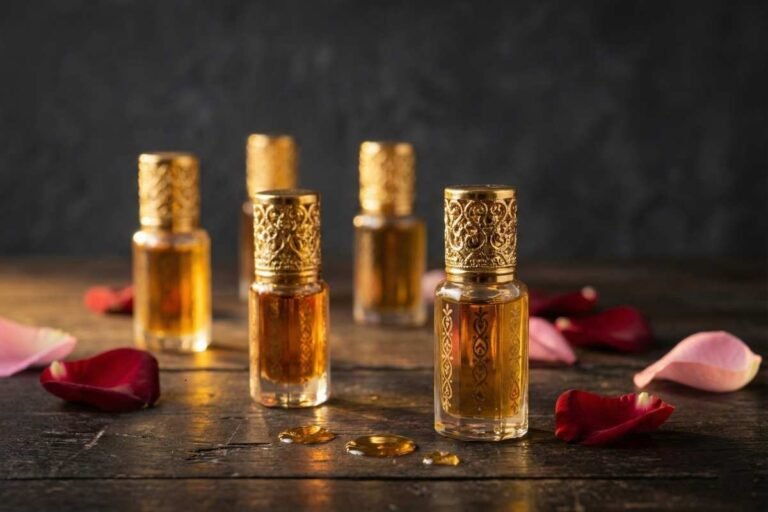
Attar is a fragrance oil. No alcohol, no water, no dilution.
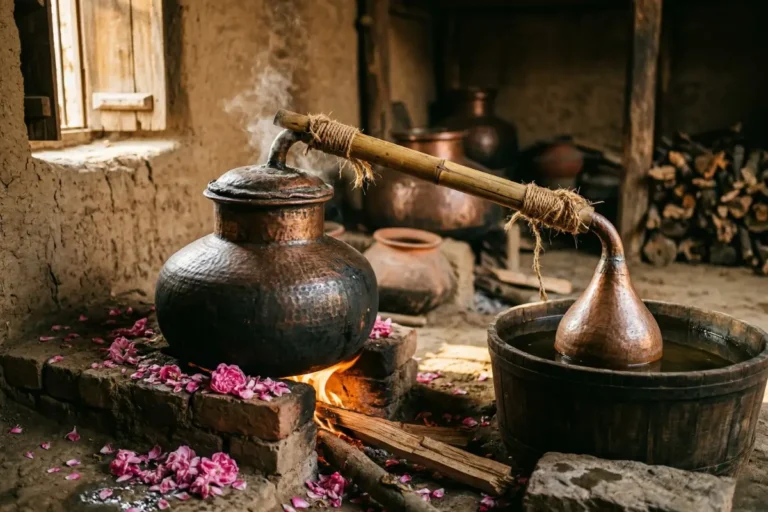
It’s extracted from natural sources like flowers, herbs, wood, and spices through traditional distillation. The most well-known method is called deg-bhapka, used in Kannauj (India’s attar capital) for centuries.
The distilled essence sits in a base of sandalwood oil or a lighter carrier oil. You dab it on, not spray. A tiny amount goes a long way.
(I’ve written a whole separate guide on what attar actually is and where it comes from if you want the full deep-dive.)
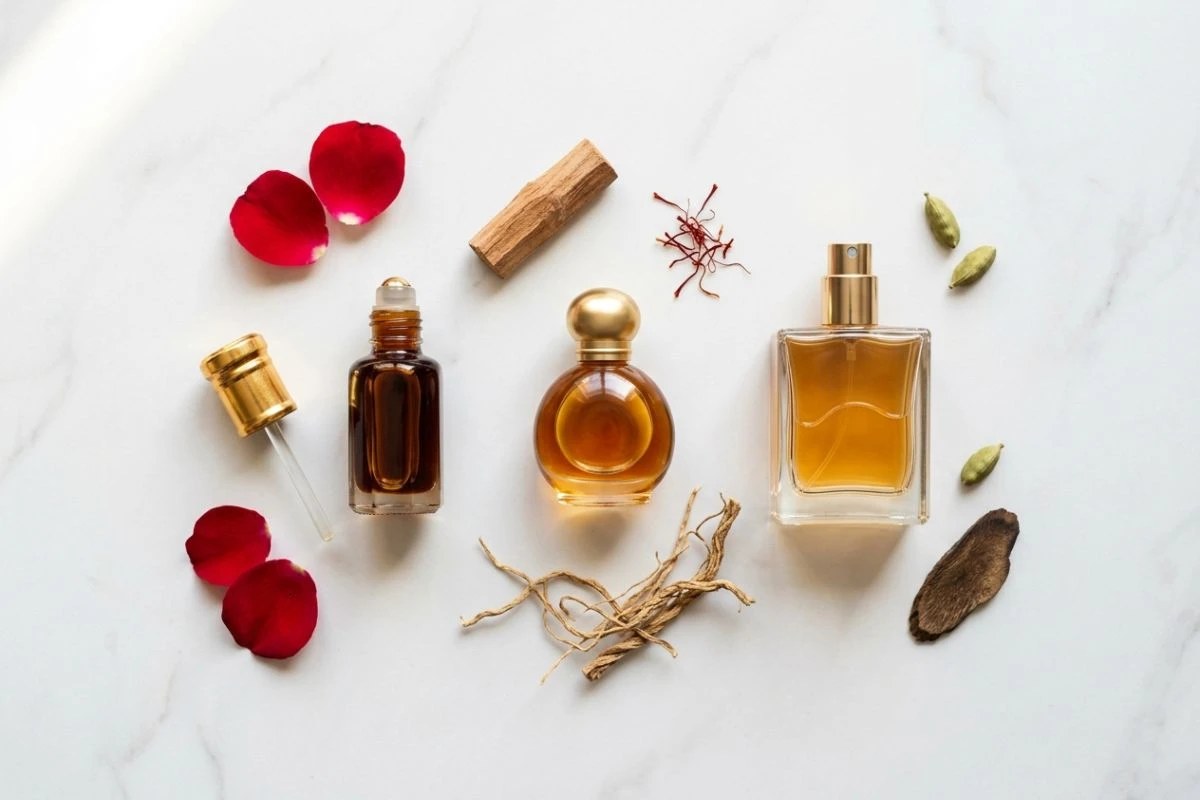
Perfume, or parfum, is the strongest concentration in Western fragrance.
We’re talking 20-30% fragrance oils dissolved in alcohol and water. This is top-shelf department store stuff. Costs the most per bottle. And honestly, most people don’t actually buy it. When someone says “I’m wearing perfume,” they almost always mean EDP.
EDP (Eau de Parfum) is what people are actually wearing.
15-20% fragrance oils in alcohol. Slightly less concentrated than parfum, way more accessible in price, and the most popular format sold worldwide right now. Walk into any store, grab a fragrance off the shelf. Nine times out of ten, it’s an EDP.
There are lighter formats too, like EDT (Eau de Toilette) and EDC (Eau de Cologne), but that’s a different conversation. This guide is about the three formats people actually debate over.
One thing to flag early, though:
These three aren’t just the same product at different strengths. Attar is oil-based. Perfume and EDP are alcohol-based. That single difference changes everything. How they smell on you, how long they last, how people around you experience them.
All of that is coming up next.
2. Attar vs Perfume vs EDP: The Real Differences
Okay, so now you know what each one is. But knowing the definitions doesn’t really tell you how they’re actually different in practice.
Let me walk you through the differences that actually matter.
The Base Changes Everything
Attar is oil-based. Perfume and EDP are alcohol-based.
This isn’t just a chemistry detail you can ignore. Oil sits close to your skin. It stays put. Alcohol does the opposite. It evaporates into the air, throws the scent outward, and then fades.
That one difference is why attar and EDP feel like completely different experiences even if they technically have similar notes.
Longevity Is Not Even Close
A good attar will give you 6 to 10+ hours on skin. Sometimes more. EDPs typically land around 4 to 6 hours. Perfume (parfum concentration) sits somewhere in between at 6 to 8 hours.
Why? Because oil doesn’t evaporate the way alcohol does. It’s that simple.
I wore a sandalwood-based attar to a friend’s outdoor wedding last summer. 42°C, three hours of standing in direct sun.
By the time we sat down for dinner, I could still catch it on my wrist. My cousin sprayed on an EDP that morning. His fragrance was gone before the ceremony even ended.
Projection Works Differently, Not Less
This is where people get confused. EDPs and perfumes project hard in the first hour or two. You walk into a room, and people notice. Attar doesn’t do that.
What attar does instead is reward closeness. Someone sitting next to you, leaning in during a conversation, that’s when they catch it. It’s a more intimate experience.
Neither approach is better. They’re just designed for different situations.
Ingredients Are a Real Split
Attars are traditionally all-natural. Flowers, herbs, wood, spices, distilled and received into natural oils. Modern perfumes and EDPs are mostly built from synthetic aromachemicals created in labs.
Quick note: synthetic doesn’t mean bad. Some of the best-smelling fragrance molecules ever created are synthetic. This isn’t a purity contest. It’s just a difference worth knowing about.
Price Is More Nuanced Than You’d Think
Attars range from ₹200 for a basic rose attar to ₹5,000+ for pure oud or saffron. EDPs go from ₹500 budget options to ₹15,000+ for niche brands. Parfum concentration almost always sits at the premium end, ₹2,000 to ₹25,000+.
But here’s the thing. You dab attar. One or two touches and you’re set for the day. EDPs? You’re spraying 4 to 5 pumps each application. The bottle empties way faster than you’d expect.
Application Is a Different Ritual
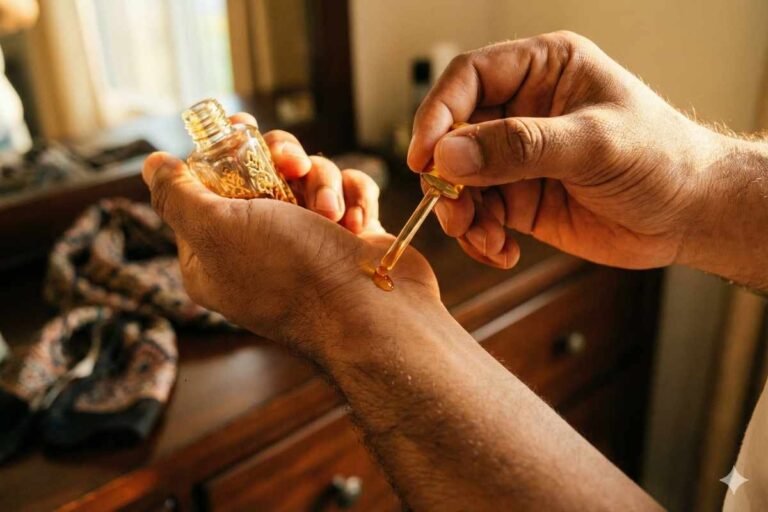
Attar comes in a small vial. You open it, dab it on your wrists, behind your ears, maybe on your collar. It’s slow, it’s intentional.
EDP and perfume are spray-and-go. Quick, convenient, easy to carry around for reapplication.
Both have their place. I’ll be honest though, there’s something about the attar ritual that makes you feel like you’re actually choosing your scent for the day rather than just defaulting to whatever bottle is sitting on your shelf.
Skin Interaction Is Where Attar Gets Interesting
Because it’s oil-based, attar blends with your body chemistry in a way alcohol-based fragrances don’t. The same attar will smell slightly different on you than on your friend.
Your skin, your body heat, your natural oils, all of that shapes the final scent.
EDPs are more consistent. What you smell in the bottle is mostly what you get on skin. Some people prefer that predictability. Others love the personal touch attar gives you.
Here’s something that surprised me early on. I applied the same rose attar on my wrist and on a cotton kurta. My skin held it for maybe 7 hours. The kurta? Almost two days.
Nobody tells you fabric is a cheat code for attars.
Quick Reference: The Full Comparison at a Glance
| Factor | Attar | EDP | Perfume (Parfum) |
|---|---|---|---|
| Base | Natural oil (sandalwood or carrier oil) | Alcohol + water | Alcohol + water |
| Concentration | Pure oil, no alcohol dilution | 15-20% fragrance oils | 20-30% fragrance oils |
| Longevity | 6-10+ hours | 4-6 hours | 6-8 hours |
| Projection | Intimate, close-range | Moderate to strong throw | Strong initial throw |
| Ingredients | Traditionally all-natural | Mostly synthetic | Mix of natural and synthetic |
| Application | Dabbed from a vial | Sprayed | Sprayed |
| Price (India) | ₹200 to ₹5,000+ | ₹500 to ₹15,000+ | ₹2,000 to ₹25,000+ |
| Best For | Hot climates, intimate wear, long-lasting skin scent | Daily wear, office, social events | Special occasions, evenings |
| Skin Interaction | High, blends uniquely with body chemistry | Moderate | Moderate |
| Heat Performance | Excellent, oil stays put | Alcohol evaporates faster in heat | Better than EDP but still alcohol-based |
3. How Each One Is Actually Made
You don’t need to become a fragrance chemist to appreciate this. But understanding how these three are made explains a lot about why they behave so differently on your skin.
How Attar Is Made
The traditional method is called deg-bhapka. It’s been used in Kannauj, Uttar Pradesh for hundreds of years, and it’s beautifully low-tech.
Here’s the short version:
- Raw materials (rose petals, jasmine, vetiver, herbs, wood) are placed in water inside a large copper still called a deg
- The deg is heated over a wood fire. Steam carries the essential oils upward
- That steam travels through a bamboo pipe into a receiving vessel called a bhapka, which is filled with sandalwood oil
- The sandalwood oil absorbs the fragrance. This process repeats daily for 15 to 20 days for a single batch
The yield is tiny. We’re talking hundreds of kilos of raw flowers to produce a few milliliters of finished attar. That’s not an exaggeration.
I haven’t been to Kannauj yet. That trip is very much on my list.
But I’ve gone deep into this process through artisan accounts and documented footage from these workshops.
Watching massive piles of rose petals go into a copper still, knowing all of that becomes a few tiny vials, put the pricing into perspective instantly.
There is no shortcut in this process. There never has been.
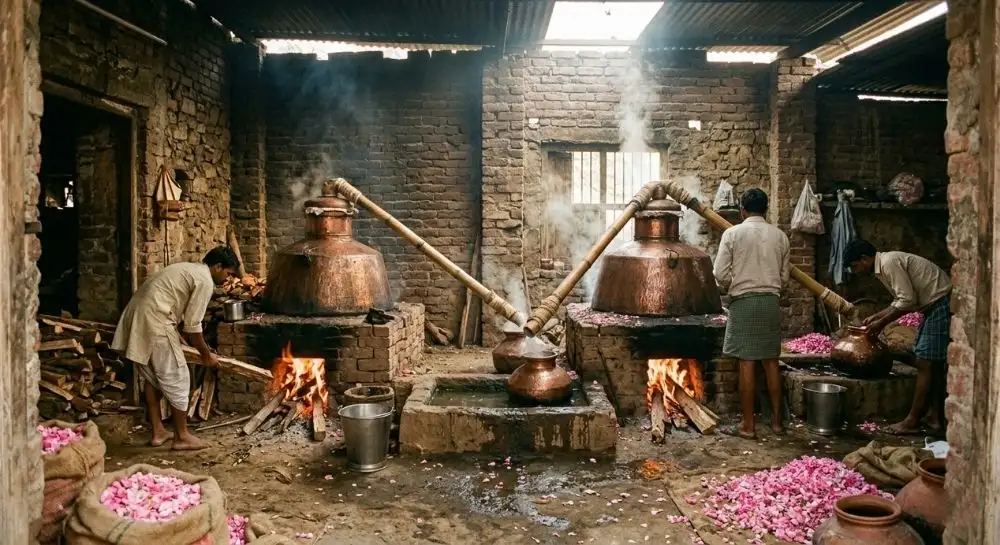
I cover the deg-bhapka method in a lot more detail in my how attar is made guide if you want the full breakdown.
How EDP and Perfume Are Made
Modern fragrances take a completely different approach.
A perfumer (sometimes called a “nose”) blends synthetic aromachemicals in a lab. These are molecules engineered to smell a specific way.
Some replicate natural scents. Others are entirely new smells that don’t exist in nature.
The blend is then:
- Dissolved in alcohol at a specific concentration (15-20% for EDP, 20-30% for parfum)
- Left to macerate (basically age) for weeks or sometimes months, so the ingredients marry together
- Filtered, bottled, and shipped
It’s faster, more scalable, and way more consistent batch to batch. A bottle of the same EDP bought in Mumbai will smell identical to one bought in Paris. That’s by design.
Why This Matters to You
The production method directly shapes what you experience when you wear it.
Attar, because it’s naturally distilled, has a subtle complexity that shifts and evolves on your skin throughout the day. The opening might smell different from what you get three hours later. That’s the natural compounds interacting with your body.
EDPs and perfumes are more predictable. What you smell in the first spray is largely what you’ll smell all day, with some dry-down variation. For a lot of people, that consistency is exactly what they want.
Neither is objectively better. They’re just built differently, from the ground up.
4. 5 Myths About Attar That Need to Die
There’s a lot of misinformation about attar floating around. Some of it comes from people who’ve never actually worn it. Some of it comes from attar purists who overcorrect in the other direction.
Let’s clean this up.
Myth 1: “Attar Is Old-Fashioned. It’s Only for Religious Occasions.”
This is probably the most common one, and it’s completely wrong.
Attar has been worn daily across South Asia, the Middle East, and parts of Southeast Asia for centuries. Not just at mosques or temples. Daily. To work, to social gatherings, to everything.
The “it’s only for religious use” perception is a very modern, very narrow view. There are fresh, clean attars perfect for a regular Tuesday. There are heavy, oud-based attars that’ll outperform any designer EDP at a formal event. The range is massive.
Myth 2: “Attar Doesn’t Project. Nobody Will Smell It on You.”
Attar projects differently, not less. We covered this in the comparison section, but it’s worth repeating here because this myth kills attar for so many people before they even try it.
An EDP announces you when you walk into a room. An attar rewards people who come close to you.
I’ve had people lean in during a conversation and ask “what are you wearing?” more times with attar than I ever did with an EDP. That close-range pull is its own kind of powerful.
And if you genuinely want more throw from your attar? Apply it on fabric. Problem solved.
Myth 3: “Attar Is Always Better Because It’s Natural.”
I say this as someone who loves attar. No. Natural does not automatically mean better.
Some synthetic molecules in modern perfumery smell absolutely incredible and perform beautifully. Dismissing all synthetic fragrance because “it’s not natural” is just as ignorant as dismissing attar because “it’s old-fashioned.”
The best approach is appreciating both for what they are. Attar purists who trash all EDPs are as misguided as perfume snobs who think attar is primitive.
Myth 4: “All Attars Are the Same. Just Rose or Sandalwood.”
This one makes me laugh.
Yes, gulab (rose) and sandalwood are the classics. They’re what most people have smelled. But the world of attar goes so much further than that.
Vetiver (khus). Saffron (kesar). Jasmine (chameli). Oud (agarwood). Musk. Amber. Hina. Shamama. There are dozens of regional specialties across India alone. The variety honestly rivals what you’d find in any modern perfume house’s catalog.
If you’ve only ever smelled rose attar and decided “attar isn’t for me,” you haven’t even scratched the surface.
Myth 5: “EDP Is Better Value Because You Get More Liquid.”
This sounds logical until you do the actual math.
You dab attar. One or two touches per application. A small 8ml vial can last you close to two months of daily use. An EDP? You’re spraying 4 to 5 pumps each morning. That 50ml bottle disappears faster than you’d expect.
I tracked this roughly once. A ₹600 attar vial (8ml) lasted me about the same time as a ₹2,000 EDP (50ml). The attar cost literally a third of the price for the same period of daily wear.
Volume isn’t value. Cost-per-wear is value. And on that metric, attar wins more often than people realize.
5. How to Pick the Right One for You
There’s no single right answer here. It depends on what you care about most. So instead of giving you one recommendation, here’s how to think about it based on what matters to you.
If You Care About Longevity Above Everything
Go with attar. Oil clings to skin and fabric far longer than anything alcohol-based. Especially in hot weather, where alcohol evaporates faster and cuts your EDP’s lifespan in half. This isn’t opinion. It’s just how the chemistry works.
If You Want People to Notice You the Moment You Walk In
EDP or perfume. No contest. Alcohol-based projection fills a room in the first hour or two in a way attar simply doesn’t. If sillage and presence are the priority, this is your format.
If You Live in a Hot or Humid Climate
Attar has a structural advantage here. Heat accelerates alcohol evaporation. That’s bad news for your EDP. Oil stays put regardless of temperature.
If you’re in India, especially anywhere that regularly crosses 35°C, this alone is worth considering.
If You’re on a Budget
Start with attar. Seriously.
Entry-level attars from Kannauj or local markets cost ₹200 to ₹500 and deliver genuine, quality scent. Entry-level EDPs at the same price point are usually disappointing. Watered down, generic, gone in two hours.
Your money goes further with attar at the lower end of the price spectrum.
If You Want Variety and Convenience
EDPs win here. Spray and go. Easy to carry in a bag for reapplication. Massive range available online and in stores. If you like switching fragrances depending on your mood and don’t want to think too hard about application, EDP is the more practical choice.
If You Want Something Truly Unique to You
Attar. Because it’s oil-based and blends with your body chemistry, the same attar will smell slightly different on you than on someone else. Your skin, your body heat, your natural oils all shape the final result.
EDPs are more standardized. Everyone wearing the same EDP smells more or less identical. Some people prefer that consistency. But if you like the idea of your fragrance being YOURS, attar gives you that.
Or Just… Use Both
My honest take? Don’t pick one format and ignore the others.
I reach for attar on days when I want something personal and close. A regular workday, a dinner with friends, a quiet evening. I reach for an EDP when I’m heading somewhere crowded and want my fragrance to do some of the talking for me.
They’re different tools. Not competitors.
6. When to Wear What: A Situational Guide
Knowing the differences is one thing. Knowing when to actually reach for which one is where it gets practical.
Here’s how I think about it.
Daily Office or Work
Go light. A clean attar like vetiver, khus, or a mild sandalwood works perfectly here. Subtle enough that coworkers won’t be overwhelmed, but it’ll last through the entire workday without reapplication.
An EDP works fine too, but you’ll probably need to reapply after lunch.
I made the mistake of wearing a strong oud attar to a small office meeting once. Closed room, air conditioning circulating the scent everywhere. It was NOT subtle. Lesson learned. Save the heavy stuff for open spaces or evenings.
Weddings and Formal Events
This depends on what kind of presence you want.
A rich attar (oud, saffron, musk) gives you a deep, personal scent that people notice when they hug you or stand close. A strong EDP or parfum fills the room and announces your arrival.
Both work. But here’s where context matters. An outdoor Indian wedding in the summer? Attar wins by a mile. That 40°C heat will eat through your EDP in an hour. The attar will still be going at dinner.
Date Night
This is where attar genuinely shines.
The whole point of close-range sillage is that it rewards intimacy. A warm, slightly sweet attar, something in the rose-oud or amber-musk family, creates a scent aura that only someone sitting right next to you can appreciate.
That’s not a weakness. On a date, that’s exactly what you want.
Gym or Post-Workout
Neither. Seriously.
But if you absolutely must wear something, a light EDT is your best bet here. Attar and sweat can get unpredictable. EDP after a workout is just overkill.
Travel
Attar is the practical winner, and it’s not even close.
Tiny vial, no risk of alcohol spilling in your bag, no issues with airport liquid restrictions. I’ve carried attar in my pocket on flights without thinking twice. Try doing that with a 100ml EDP bottle.
Casual Hangout or Weekend
Whatever you feel like. Honestly.
This is the one situation where there’s no right answer and all the advice in the world doesn’t matter. Wear what makes you happy. That’s it.
The Bottom Line
I’m not here to tell you to throw away your EDPs and go all-in on attar. That would be dumb advice.
Perfume and EDP exist for good reasons. They’re convenient, they project well, they come in an insane variety, and some of them smell genuinely amazing. I’m not going to pretend otherwise.
But here’s what I will say.
Most of us in India grew up surrounded by perfume and EDP marketing. Billboards, Instagram ads, influencer reviews, duty-free shop displays. That’s the world we were sold.
And somewhere in that noise, attar got left behind. Dismissed as something your grandfather wore. Something old. Something irrelevant.
It’s none of those things.
Attar is one of the oldest fragrance traditions on the planet. And it’s from here. From India. From Kannauj.
It’s not a lesser alternative to Western perfumery. It’s a completely different tradition with its own strengths, its own beauty, and its own reasons to exist.
All I’m asking is this. Buy one good attar. Wear it alongside your existing collection for a week. Don’t replace anything. Just add it.
The day I actually sat down and compared the two properly, not from YouTube reviews, not from marketing copy, but by wearing both in the same week in Jaipur summer heat, attar earned its spot in my collection permanently.
Give it that same honest chance.
If you want to start from the basics, I’ve written a complete guide on what attar actually is and where it comes from. And if you already own attar but feel like it fades too quickly, my guide on how to apply attar so it actually lasts all day might help.
I’ll also be publishing reviews of specific attars soon. Real ones. Tested in real Indian conditions. Stay tuned for those.
FAQs
Is attar stronger than perfume?
It depends on what you mean by “stronger.” In terms of longevity, yes. Attar lasts longer on skin because oil doesn’t evaporate like alcohol does. But in terms of projection, perfume and EDP throw scent further in the first couple of hours. Attar is stronger in staying power, perfume is stronger in initial presence.
Can I wear attar every day?
Absolutely. There are light, everyday attars (vetiver, khus, light sandalwood) that work perfectly for office, commute, or casual settings. Attar isn’t just for special occasions. People across India and the Middle East have been wearing it daily for centuries.
Does attar expire?
Not in the way EDPs do. Most pure attars actually get better with age because the oils mature and deepen over time. If stored properly in a cool, dark place with the cap sealed tight, a good attar can last years. Some aged attars are highly prized specifically because they’re old.
Is attar safe for sensitive skin?
Generally, yes. Because attar is oil-based and traditionally free of alcohol and synthetic chemicals, it tends to be gentler on skin than alcohol-based fragrances. That said, natural doesn’t mean allergen-free. If you have specific sensitivities, test a tiny dab on your inner wrist and wait a few hours before full application.
Why is some attar so cheap and some so expensive?
Raw materials. A basic rose attar using commonly available petals might cost ₹200 to ₹500. An attar made from oud (agarwood), saffron, or aged sandalwood can run into thousands because those ingredients are genuinely rare and expensive to source. The distillation process also matters. A 15-day deg-bhapka distillation costs more to produce than a quick modern extraction.
Can I layer attar with EDP?
Yes, and a lot of fragrance enthusiasts do this. Apply attar first as a base (it sits close to skin), then spray your EDP over it. The attar gives longevity and depth, the EDP gives initial projection. It’s a solid combination if you want the best of both.
Is attar halal?
Traditional attar is alcohol-free, which makes it compliant with Islamic guidelines on fragrance. This is one of the reasons attar has such deep roots in Muslim cultures across South Asia and the Middle East. If this matters to you, just verify the specific attar you’re buying doesn’t use any alcohol-based carrier, as some modern attars do.
How much attar should I apply?
Less than you think. One or two dabs on your pulse points (wrists, behind ears, sides of neck) is enough for most attars. Attar is concentrated oil, not a spray. You don’t need to cover yourself in it. If you want more longevity, dab a little on your collar or sleeve instead of adding more to your skin.